Original article: https://robotzine.co.kr/entry/271840
The robotics startup Diden Robotics Co., Ltd. (hereinafter referred to as Diden Robotics) is accelerating the commercialization of the wall-climbing robot, which freely moves across walls and ceilings using magnetic feet. Diden Robotics is set to introduce a new paradigm for automation tasks such as welding and inspection in high-risk environments of steel structure manufacturing sites, including shipbuilding, using the wall-climbing robot. Having successfully secured seed investment, the company plans to pursue demonstration projects with large enterprises, showcasing the wall-climbing robot equipped with its permanent electromagnet technology.

Junny (Joon-Ha) Kim, CEO of Diden Robotics / Photo by Robot Technology
Founded in March 2024, Diden Robotics is a robotics startup committed to developing robots that can perform tasks wherever they are needed, as encapsulated in the name 'Diden.' After earning a Ph.D. in Professor Hae-Won Park's Hubo Lab at KAIST, CEO Junny Kim established the company to develop automation solutions for steel structure manufacturing sites, including shipbuilding. Leveraging research and development experience from KAIST, the company focuses on reducing worker risks and increasing work efficiency by developing the wall-climbing robot for hazardous and hard-to-reach work environments.
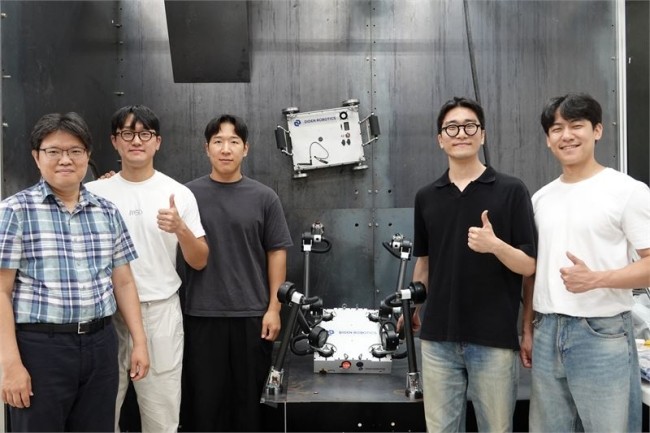
Research team led by Professor Hae-Won Park of KAIST Hubo Lab and Junny Kim, CEO of Diden Robotics (second from right) / Photo by Diden Robotics
Quadruped Wall-Climbing and Ceiling-Walking Robot
In the manufacturing sites of large steel structures, like those in shipbuilding, where individual materials are massive, high-altitude tasks are inevitable during assembly. In such environments, installing equipment at target locations or facilitating worker movement is challenging. While articulated robots are generally applicable to various tasks, utilizing them is difficult if the working location is at a height or if installation points are curved. Although recently distributed multicopters are effective for aerial photography and inspection at high locations, they are unsuitable for precise high-altitude processing tasks requiring reactive force from the target.
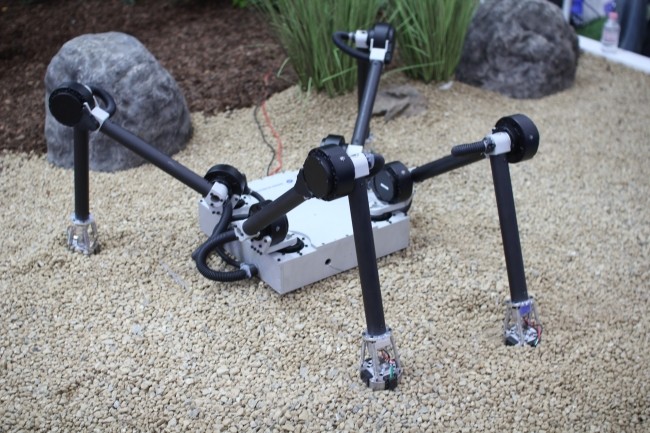
Diden Robotics' wall-climbing robot / Photo by Robot Technology
The solution to these challenges is the wall-climbing robot, which is designed to traverse obstacles and adhere to walls and ceilings. Unlike typical bipedal and quadrupedal robots, this robot is specifically engineered for movement and tasks on walls and ceilings, where work stability and precise task implementation through grounding capability are vital. Wall-climbing robots are generally divided into 'air suction' and 'magnetic' methods. Although air suction can attach to various walls or materials through adhesion, the size of the robot increases for stability, consuming a significant amount of energy. Furthermore, considering most operations are at heights, there is a risk of the robot falling if the power is cut off. Conversely, magnetic methods are limited on non-ferrous metal surfaces, facing challenges such as varying magnet strength on curved surfaces or detaching from strong magnetic adhesion surfaces. Here, Diden Robotics is leveraging permanent electromagnet technology to develop the 'DIDEN30,' a 30kg robot that overcomes obstacles, traversing walls and ceilings.
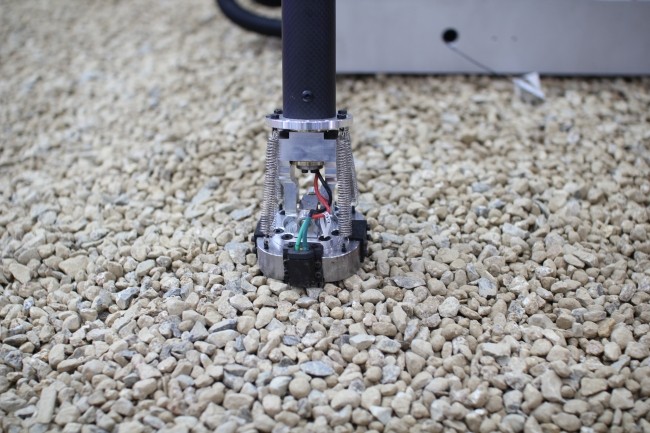
Foot of the wall-climbing robot with integrated permanent electromagnet technology / Photo by Robot Technology
Development of Automation Technology for Welding and Inspection in Shipbuilding
Diden Robotics' wall-climbing robot is versatile, applicable for inspections, repairs, and maintenance on large steel structures like ships, bridges, transmission towers, large storage tanks, and construction sites. This capability is made possible by Diden Robotics' permanent electromagnet (EPM) technology applied to the robot's feet, developed at Professor Hae-Won Park's laboratory at KAIST, where Junny Kim worked. This technology was selected among KAIST's representative research achievements of 2023 and featured in the international journal 'Science Robotics,' thus showcasing its merit. The combination of permanent electromagnet and magnetorheological elastomer allows for powerful adhesion and swift adhesive strength control, reducing time and energy for attachment and detachment.
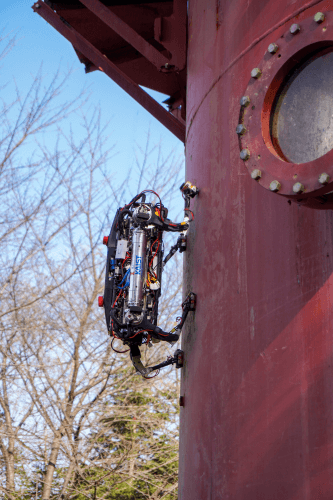
The 'Marvel' wall-climbing robot developed with KAIST Professor Hae-Won Park's permanent electromagnet application / Photo by Diden Robotics
Yet, in shipbuilding, there are more obstacles compared to general industrial sites, including structures like beams and pipes. Moreover, the robot needs to drag the welding cable along for welding, requiring methods to prevent the cable from snagging on obstacles, which might cause mobility issues or lead to robot falls and cable detachment, thus raising safety concerns. CEO Junny Kim personally visits sites, collaborating with workers and companies to address these real-world challenges and seeks solutions, continually striving to develop technologies that can be actually utilized in shipbuilding via field tests. Diden Robotics focuses on developing magnet foot technology and walking control algorithms to ensure safe robot walking in complex iron environments like walls and ceilings.
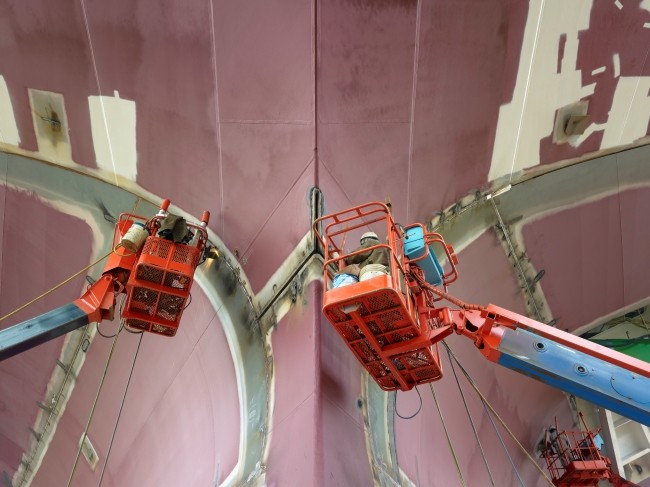
Typical welding operations in shipbuilding
The company is also researching control devices incorporating reinforcement learning techniques based on dynamic modeling to enable more stable wall-climbing movements, along with autonomous driving functionalities for efficient task execution in various environments.
Diden Robotics’ magnet-powered wall-climbing robot enhances stability and efficiency in hazardous high-altitude environments and confined spaces by eliminating the need for direct worker access. Moreover, it reduces labor costs by substituting roles of relatively high-paid specialists, such as welders. Additionally, the robot is designed to prevent falls by maintaining magnet adhesion even if power is cut off during wall or ceiling navigation or task execution.
Development of Robotics Technology Applicable to Various Industries
Diden Robotics offers solutions tailored to customer requirements based on hardware and software elements such as design structure, permanent electromagnet design, reinforcement learning, mapping, navigation, and state estimation, allowing customization.
After successfully obtaining seed investment recognition in August, Diden Robotics, with the acknowledgment of its technology excellence, continues its first successful investment drive since establishment. It is intensively working on securing certification for its corporate laboratory and gaining personnel for robot development.
CEO Junny Kim stated, “The shipbuilding industry faces significantly hazardous conditions and severe labor shortage issues compared to other sectors. Achieving robot-based welding automation requires overcoming challenges like robot mobility, load limits, and stability,” he continued, “We are dedicated to providing solutions for welding and inspection in shipbuilding, enhancing safety and efficiency while aiding in solving workforce shortages.”
He further expressed, “Leveraging wall-climbing robot technology, we aim to expand the mobility and working space of robots from 2D to 3D, beginning with ship welding and advancing continuous development for application in various industries.”